
Leisure Facilities Powered by Biometric Solutions
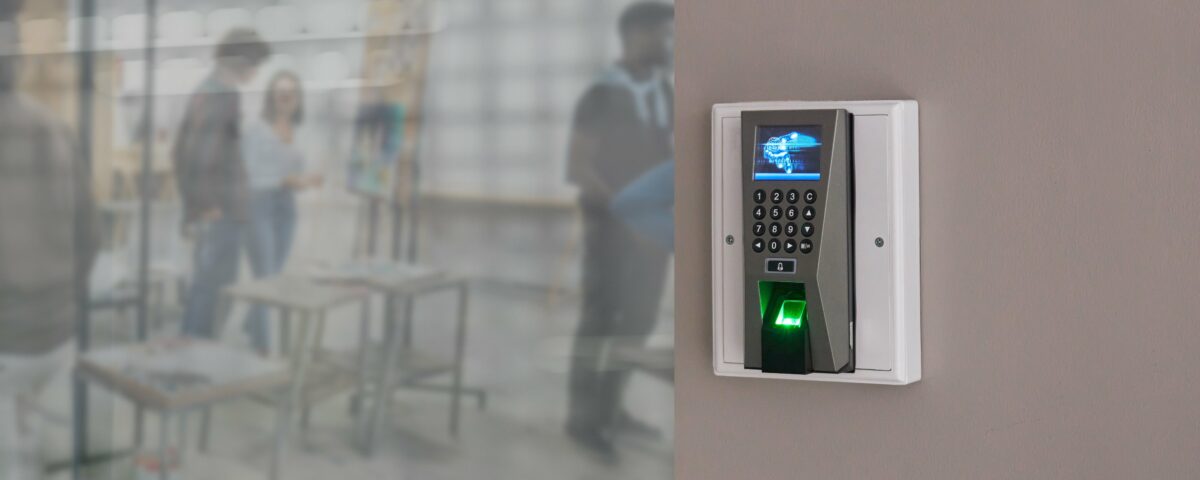
Having a rest after work or school activities often involves visiting various hobbies or sports-related facilities. Nevertheless, getting access to specialized centers often requires badges or passes that are inconvenient to carry. The answer comes with biometric technologies—no more fumbling for keys or membership cards.
From swimming pools to sports clubs and art classes, leisure facilities can simplify their operations by implementing biometric attendance and visitor management systems. We are talking about a user-friendly environment for both children and adults, especially in places that require bringing additional gear or include humid and wet conditions, like leisure family pools.
Why are the principles of manual check-in/ check-out outdated?
Leisure facilities often rely on outdated manual or card-based systems for attendance and access control. While familiar, these methods are full of weak points that can create chaos for both staff and customers. Below, we break down the possible liabilities:
1. Poor security and fraud
Membership cards can be lost, get wrinkled or become illegible. Also, as the child ages, photographs have to be renewed. For a swimming pool or a children’s activity center, this is a major concern, as it can lead to safety risks and revenue loss. A child could use an older sibling’s card to enter a restricted area or an adult could share their gym membership with a friend.
2. Inefficient check-ins
Manual check-in processes are slow. A line of people waiting to sign in with paper logbooks to their leisure activities or a receptionist manually verifying each person’s details can quickly lead to frustration and a poor customer experience. For a busy gym during peak hours or a children’s sports practice, this bottleneck is a huge inconvenience, especially before specific practices or championships.
3. Data and management struggles
Outdated systems make it difficult to get a clear picture of attendance and facility usage. Staff must manually compile data from paper records, which is time-consuming and prone to errors. This scattered data makes it hard to track membership status, monitor peak hours or create accurate usage reports for business planning. Also, it makes it harder to monitor cancelled subscriptions.
How would biometric attendance and visitor management systems work in leisure facilities?
Firstly, biometric attendance and management systems are digital and only require the usage of one (or several) of the biometric modalities that the organization chooses to use for verification. By using a unique physical characteristic to verify identity, biometrics provides a fast, secure and convenient solution for any leisure-based business, meaning that it is easier for crowd control and queue management.
Secondly, the biometric check-in/check-out is automatically incorporated into an automated log, thus facilitating timekeeping and ensuring that only authorized individuals are on the premises.
Finally, when it comes to leisurely children’s activities, it is easier for coaches to track who came to practice or for art teachers to know how many supplies they will need to prepare/ give out, or what task to give to their students.
How would the implementation of a biometric system look?
1. Enrollment: When a new member signs up, their unique biometric data (such as a fingerprint scan or facial image) is taken and converted into an encrypted digital template. The original biometric data is never stored; only the encrypted template is kept in the system, making it impossible to reverse-engineer.
2. Verification: Upon arrival, the member simply places their finger on a scanner or looks into a camera. The system compares the live scan to the stored template and, if they match, grants instant access. This process takes less than a second. As the biometric marker is unique, no friend or relative can abuse the system.
3. Technological setup: At the entrance, members will presumably interact with a kiosk. The kiosk is equipped with a biometric scanner, which can be a fingerprint reader, a facial recognition camera or both. When a child or adult approaches, they simply place their finger on the scanner or look into the camera. The system instantly captures their biometric data, which is then compared to the encrypted template stored in the database. For example, NCheck provides both visitor management and attendance tracking and can be custom-tailored to fit unique business cases.
If the biometric data matches the stored template, the system sends a signal to the access control mechanism, such as a turnstile, an electronic lock on a door or a gate. It will then unlock, allowing the member to enter the gym, tennis court or other designated area.
The benefits of biometric systems for leisure facilities
Enhanced security and safety
Biometrics is the most secure way to manage access. Since fingerprints and faces cannot be lost, stolen or shared, you can guarantee that only paying members and authorized visitors can enter your facility. For a children’s sports club or swimming pool, this offers immense peace of mind for parents, who know that their child’s safety is protected by an uncompromisable system.
Furthermore, access control can be used to ensure safety within the leisure facility’s locker and changing rooms. By restricting entry to the appropriate areas (e.g., men’s or women’s changing rooms), you can prevent unauthorized individuals from wandering into spaces they don’t have access to, enhancing security for all users.
Streamlined and faster access
Imagine a line of people effortlessly checking in with a quick scan. This process significantly reduces wait times, improving the overall user experience and freeing up staff to focus on more important tasks, e.g., looking after their clients and providing them with high-class care.
Simplified management and operations
Biometric systems automate attendance tracking, providing accurate, real-time data on who is using the facility and when. This allows managers to:
• Track attendance: Get precise attendance records for every class, practice or pool session;
• Automate member status: The system can automatically deny access to members with expired subscriptions or incomplete/unsuccessful payments;
• Reduce administrative burden: Eliminate the time and cost associated with printing, issuing and replacing membership cards.
Biometric attendance example scenarios in leisure facilities
Let’s say a gym member arrives for their morning workout. Instead of searching for their key card, they simply place their finger on the scanner. The door unlocks and their attendance is logged instantly. They move directly to the locker room, without any delay.
Another example could be when a parent drops their child off for ceramics class. The child’s fingerprint is scanned at the entrance, securely logging their arrival. This not only ensures the child’s safety but also sends an automated notification to the parents’ phone, confirming their safe arrival. When it’s time to pick up, the parent’s biometric scan is required to open the door, ensuring that only an authorized guardian can leave with the child.
Final remarks
By adopting biometric attendance and visitor management systems, swimming pools, gyms and children’s activity centers can enhance security, increase efficiency and provide a superior, hassle-free experience for their members and visitors. Embracing a smarter, safer way to manage your leisure facility will provide children and adults with simplified access to start their favourite activity in an instant.
You might also be interested in: What is a Physical Access Control System? A Convenient Way to Protect Your Space